
Perfectly Boiled Eggs: A Time Chart Settled by Data and Science
Same Egg, So Why Does Everyone Give a Different Time?
"Soft-boiled is 6 minutes." "No, 7." "Hard-boiled needs 12." "10 is plenty." Few kitchen questions split people as cleanly as how long to boil an egg. Same egg, same pot — so why the scattered answers?
The answer is surprisingly simple. Boil time isn't a single number; it's a function of several variables. Whether you start in cold water or already-boiling water, whether the egg is fridge-cold or at room temperature, whether the egg is large or small, how high your altitude is — and on top of all that, the fact that the white and the yolk set at different temperatures — when these interact, everyone's "correct time" lands somewhere different. Nobody is wrong; they just aren't describing the same conditions.
This article solves the problem with data, not opinion. First we look at what the recipes actually accumulated in the UnoRecipe corpus say about boiling eggs, then we fill the gaps with primary food-science sources.
What the UnoRecipe Corpus Says (and What It Can't)
Let's be honest up front. UnoRecipe currently holds 1,630 recipes, and 238 of them — about 14.6% — reference eggs (계란/달걀). Eggs appear in 77 titles, 151 tags, and 233 ingredient lists. In other words, the egg is less a star dish than an ingredient that goes into almost everything.
Yet recipes about "boiling an egg" as the dish itself are surprisingly rare. Only 2 recipes put boiling/soft-set/hard-set/poaching in the title, and just 39 egg recipes mention "boil" (삶) anywhere in their steps or tips.
The key point: structured "boil-time" data is very thin. Across every cooking step, exactly 8 step lines pair egg + boil + a number (in minutes), plus 1 tip field. So this article's time chart cannot stand on the corpus alone — it has to lean on food science for its skeleton. (For the record, the timestamps field attached to recipes is video-playback step-sync data, not cooking time, so it can't feed a boil-time chart.)
But even inside that thin data, there's a valuable signal. One recipe's step states it plainly: "Once the water boils, add the egg — 7 minutes for soft, 10 minutes for hard." Another recipe's tip says: "Boil the egg for exactly 8 minutes to get the jammy soft-set that soaks up seasoning." Two independent recipes arrive at the same conclusion: soft ≈ 7–8 min, hard ≈ 10 min. Other recipes (soy-braised eggs, egg jang) also cluster around 8 and 10 minutes, so these numbers aren't a fluke.
In short, the corpus isn't thick enough to draw the whole chart — but it's a perfectly good witness that cross-checks the chart food science gives us.
The Science: White and Yolk Set at Different Temperatures
Every secret of egg-boiling compresses into one sentence: the white and the yolk set at different temperatures.
According to the American Egg Board, egg-white protein coagulates at roughly 62.2–65°C and yolk protein at roughly 65–70°C. A pastry-science textbook gives almost the same window — white 60–65°C, yolk 62–70°C — and the UK's Institute of Food Science & Technology agrees that whites begin setting at 60°C and yolks at 65°C, with full coagulation at 70°C.
That temperature gap is exactly why soft-boiled eggs are possible. The white sets first and turns firm, while the yolk — not yet at 70°C — stays runny or jammy. It is precisely this 5–10°C "window" between white and yolk that makes the soft-boiled egg we love: a fully set white over a flowing yolk. Controlling boil time is really controlling how many degrees you push the center of the yolk to.
Go one layer deeper and you see why the white firms up so gently. Egg white isn't one substance — it's a mix of dozens of proteins. Ovotransferrin starts setting early, around 60°C, but ovalbumin — the dominant protein, over half the white — doesn't firm up until 80°C. The same source notes the yolk begins to thicken at 65°C and sets at 70°C. So in hot boiling water, by the time the yolk's center climbs to 70°C the outer white can overshoot 80°C and turn rubbery — which is why one extra minute flips soft into hard.
A common myth: proteins have no knife-edge "set point"
One myth to clear up: proteins have no single "set instantly above this temperature" point. Food scientist César Vega notes in a Live Science interview that "there's a false notion, even among scientists, that proteins have definitive, discrete denaturation temperatures" — hold a protein at a lower temperature long enough and it still sets. Texture is the product of temperature and time. So why do we time eggs in minutes at all? Because in boiling water (near 100°C) the temperature is essentially fixed, which collapses the variable you're dialing down to just one: time. That's exactly why timing in minutes works so well.
Cold Start vs Boiling Start — The Starting Line Changes the Result
The single biggest reason the same number of minutes yields different eggs is the starting temperature — and that difference shows up even more in peeling than in texture.
Food-science writer J. Kenji López-Alt concludes that the single variable that decides whether eggs peel cleanly is "cold-water start vs. boiling-water start". Heat them slowly from cold and the white bonds to the shell, making them maddening to peel; drop them into already-boiling water and the shell slips off easily. Common tricks — vinegar, salt, older eggs — barely matter; the boiling-water start is what actually counts.
Why? America's Test Kitchen explains the mechanism: plunging eggs into boiling water (or hot steam) rapidly denatures the outermost white proteins so they seize and contract, which pulls the white away from the inner shell membrane instead of bonding to it. A slow cold-water start gives those proteins time to cement to the membrane, so the shell clings.
So if you want a reproducible chart, the boiling-water start is the answer. Every egg begins from the same temperature reference point, so a chart reproduces across kitchens, the shells peel cleanly, and it matches the corpus steps that begin with "once the water boils, add the egg…" The chart below starts the clock at a boiling-water start with fridge-cold large eggs (0 minutes). If you start from cold water, add the time it takes the water to reach a boil; if your eggs are at room temperature, shave 30 seconds to a minute off.
One Last Thing: Stopping the Gray-Green Yolk Ring
Over-boil a hard egg and a gray-green ring forms on the yolk's surface. UNL Food explains that this is sulfur from the white reacting with iron from the yolk to form ferrous sulfide at the yolk's surface, usually caused by overcooking. It's harmless to taste and safety, just unappealing. The fix is two simple things: don't cook longer than you need, and plunge the eggs into cold or ice water the instant they're done. The ice bath not only prevents the ring — it halts carryover heat so you stop at the exact doneness you wanted, and it makes peeling easier.
Takeaway — You Cook a Temperature, Not a Number
The truth about boiling eggs is simple. You're not measuring *time* — you're cooking the egg's core across two thresholds: white around 60–65°C, yolk around 70°C. Time is merely a proxy for reaching those temperatures.
So fix the variables and the result is identical every time:
- Fill a pot generously and bring it to a rolling boil.
- Lower fridge-cold large eggs in gently with a spoon, and start the timer at that instant.
- Hold a gentle simmer and boil per the chart alongside (or below) — soft is 7–8 minutes, hard is 10.
- When the timer rings, transfer immediately to ice water for at least 5 minutes.
When the baseline that science draws and the records inside 1,630 UnoRecipe recipes point at the same answer, "your egg" finally comes out the same, every single time. Now meet the real recipes below that pair beautifully with the egg you just boiled.
Boil-time chart — boiling-water start, fridge-cold large eggs (food-science sourced, cross-checked against the UnoRecipe corpus; ice bath right after)
Soft / runny
6 min
White just set, tender / yolk mostly runny
—
Jammy soft-set
7–8 min
White firm / yolk thick and flowing
Corpus match: step "7 min soft" + soy-egg step/tip "8 min"
Medium
9 min
White firm / yolk set at edge, moist center
—
Hard-boiled
10 min
Both set, yolk still moist
Corpus match: step "10 min hard" · braised & jjolmyeon 10 min
Firm hard-boiled
11–12 min
Yolk fully firm (just before the gray-green ring)
—
Related Recipes
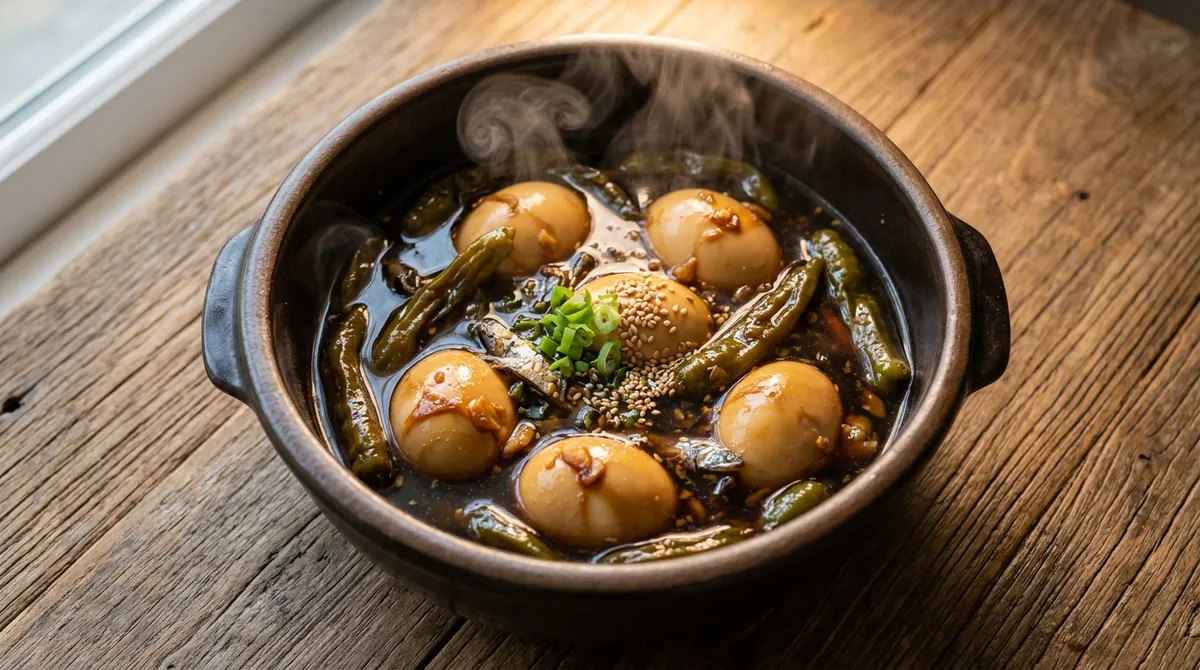 30 min
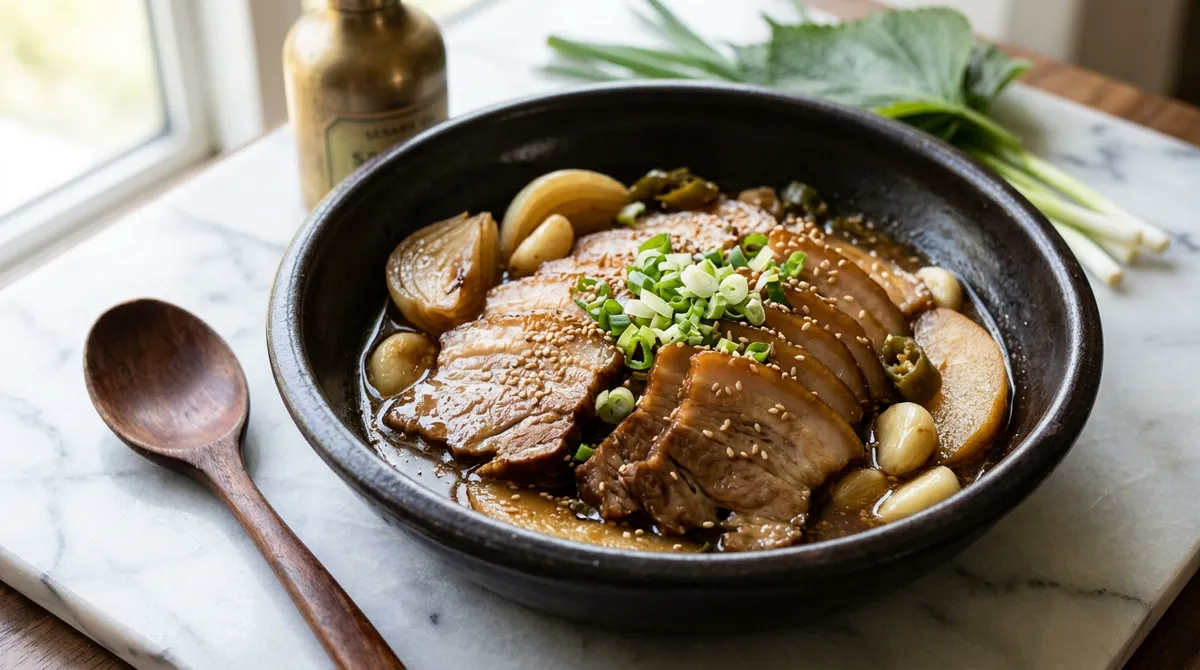 60 min
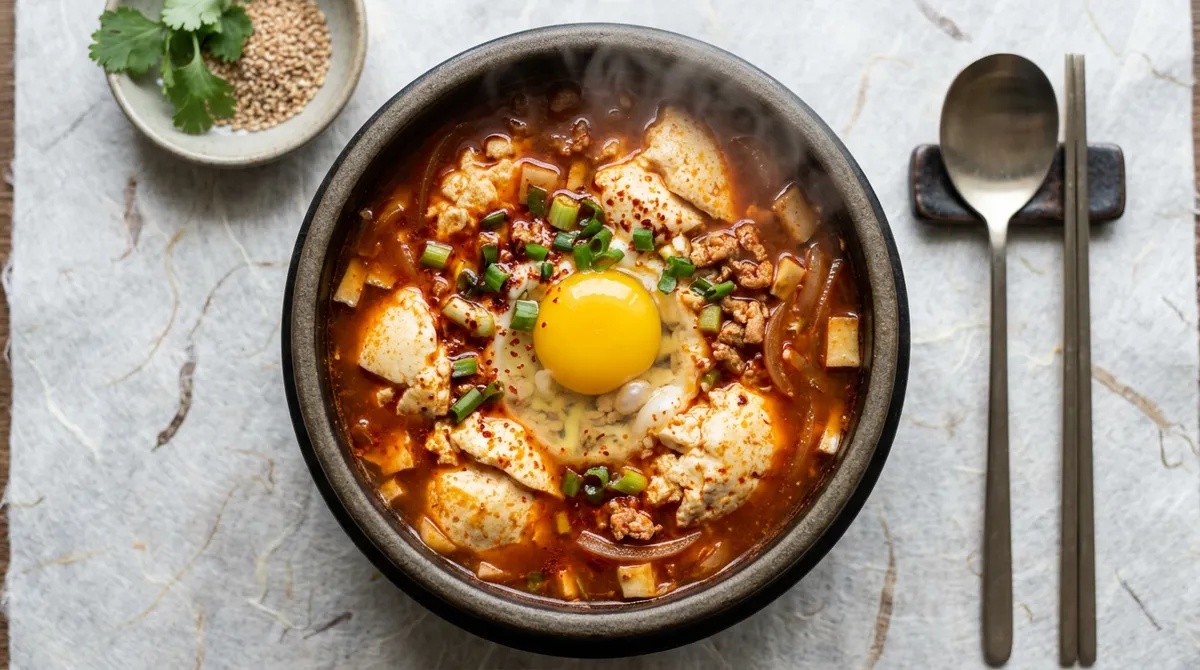 20 min
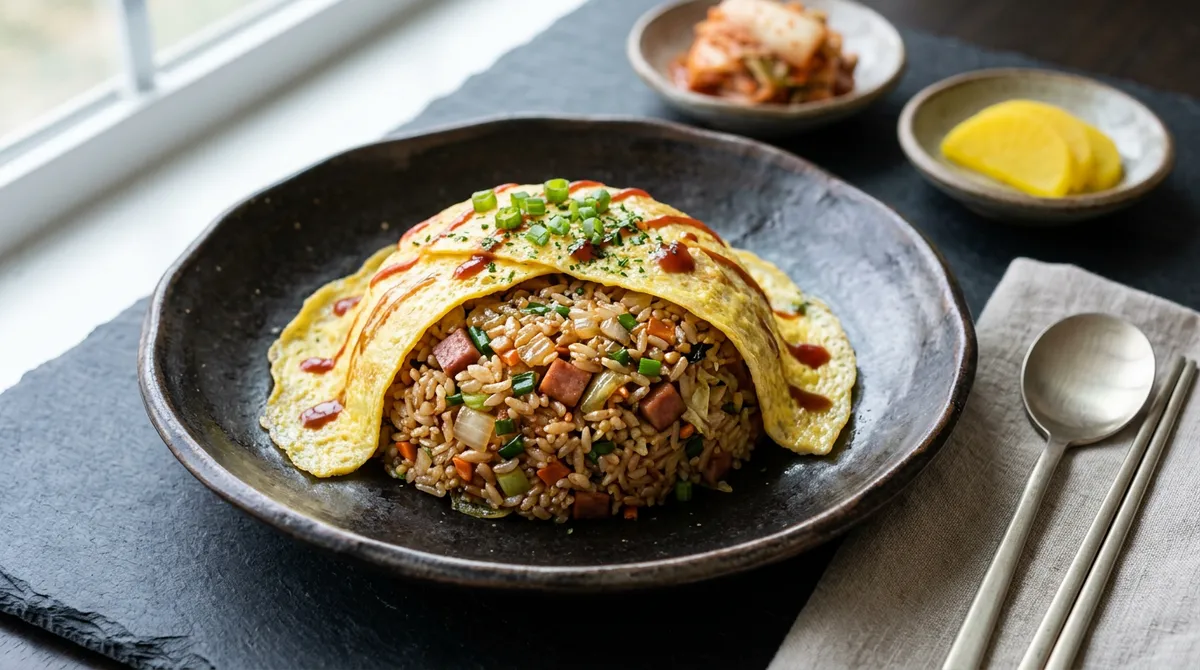 20 min
 15 min
 30 min
Eggs (large)
The chart assumes fridge-cold large eggs. Freshness and size can shift the time by about 30 seconds either way.Color-changing egg timer
Drop it in the pot with the eggs; it changes color with heat to show the soft/hard point by sight — the surest method when counting minutes is hard.Frequently Asked Questions
- Can I start from cold water instead?
- Cold starts vary by stove power, making timing unreliable. The whites also bond slowly to the inner membrane, making peeling harder. Dropping eggs into boiling water rapidly denatures the outer proteins so they shrink away from the membrane — consistent timing and easy peeling.
- Does adding vinegar or salt help peeling?
- It's a common tip, but the effect is negligible. Both J. Kenji López-Alt and America's Test Kitchen concluded that a boiling-water start is the only variable that truly matters. An ice bath right after further eases peeling via thermal contraction.
- Why does a gray-green ring form around the yolk?
- It's ferrous sulfide (FeS) from sulfur in the white reacting with iron in the yolk. Overcooking (12+ min) is the cause. Stick to the chart and cool immediately in ice water to prevent it. It's harmless to eat.
- How does room-temp vs. fridge-cold affect the time?
- This chart is for fridge-cold (~4°C) large eggs. Room-temperature (~20°C) eggs need about 30 sec to 1 min less for similar doneness. Extra-large eggs need about 30 sec more.
How to Boil Eggs Perfectly
- Fill a pot with plenty of water and bring it to a full rolling boil over high heat.
- Gently lower fridge-cold large eggs into the water using a slotted spoon or ladle. (No need to bring them to room temperature first.)
- Set a timer for your desired doneness: soft-boiled 6 min, jammy 7-8 min, hard-boiled 10 min.
- When time is up, immediately transfer to an ice bath (or cold water) for at least 5 minutes — this stops carryover cooking and prevents the gray-green ring.
- Peel and use in your dish. The boiling-water start makes the shell come off cleanly.
Sources & References
- American Egg Board — Coagulation/Thickening
- OpenTextBC — Modern Pastry: Coagulation
- Institute of Food Science & Technology — Protein coagulation
- Science of Cooking — Cooking Eggs Sous Vide
- Live Science — Cooking the Perfect Egg, Scientifically (César Vega)
- The Splendid Table — J. Kenji López-Alt's Perfect Hard-Boiled Eggs
- America's Test Kitchen — Easy-Peel Hard-Cooked Eggs
- UNL Food (Univ. of Nebraska–Lincoln) — Avoid the Green Ring